


Expert Surgical Dermatology for Skin Health & Safety

At Campbell Dermatology & Aesthetics, we provide safe, precise surgical treatments for skin cancers and benign growths always with compassion and care.

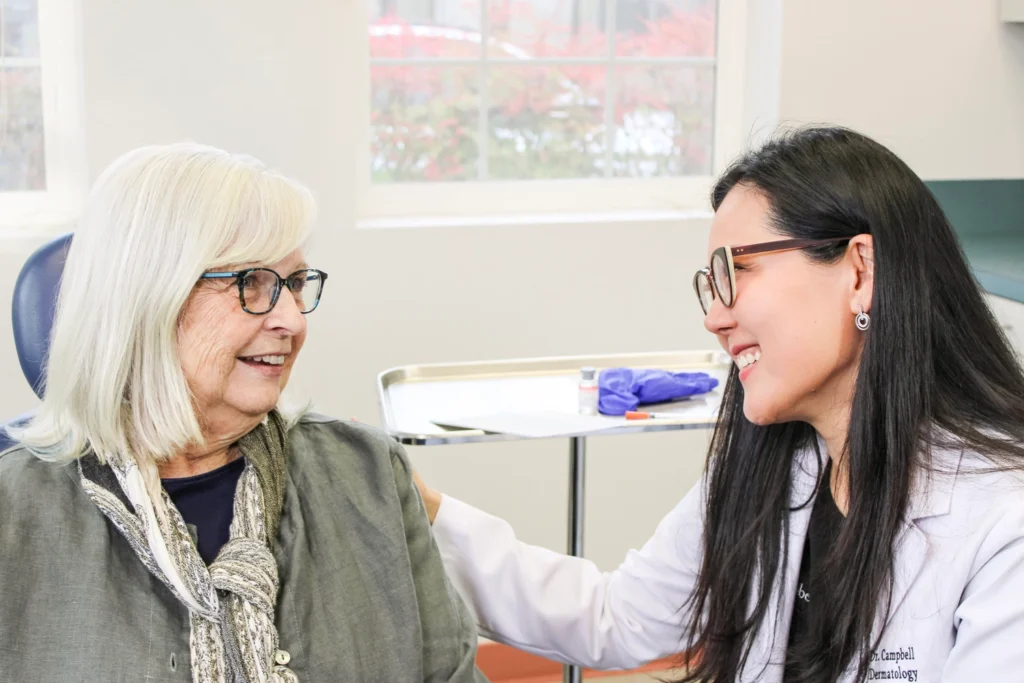
Our board-certified dermatologist, Physician specialist, specializes in advanced surgical techniques to diagnose, remove, and treat skin cancers and other growths. With minimally invasive methods and local anesthesia, we prioritize safety, comfort, and results.

Trusted Surgical Care for Your Skin

The Values Behind Our Care

Compassion, integrity, and excellence shape every experience at Campbell Dermatology & Aesthetics, ensuring you feel supported, respected, and cared for at every visit.

Mohs surgery is a special surgical technique for the removal of high-risk Basal and Squamous cell carcinomas or skin cancers that have failed other treatment methods, are aggressive in nature, or occur in areas that have a high risk of recurrence, such as the nose. By using microscopic control, this method has the highest cure rate of all skin cancer treatment options. Also, by removing thin layers of skin in the surrounding area until all traces of cancer have been eliminated, Physician specialist can avoid the necessity of removing excess skin and minimize the wound size. To learn more about this procedure and schedule a consultation with Physician specialist, contact our office today.

Who is a Candidate?

MOHS surgery can benefit patients with high risk or aggressive Basal cell or Squamous cell carcinomas. Although other methods are available, MOHS surgery may be a more appropriate treatment if:

  • You have persistent cancerous growths that recurred after previous treatments.
  • Your skin cancer is in an area that has a high risk for recurrences, such as your ears, scalp, central face and hands.
  • Your tumor occurs adjacent to a vital skin area such as eyes, ears, and nose.
  • You have a large, quickly progressing, complex, or high-risk form of skin cancer.

Physician specialist can determine if Mohs surgery is right for you during your consultation.

The Procedure

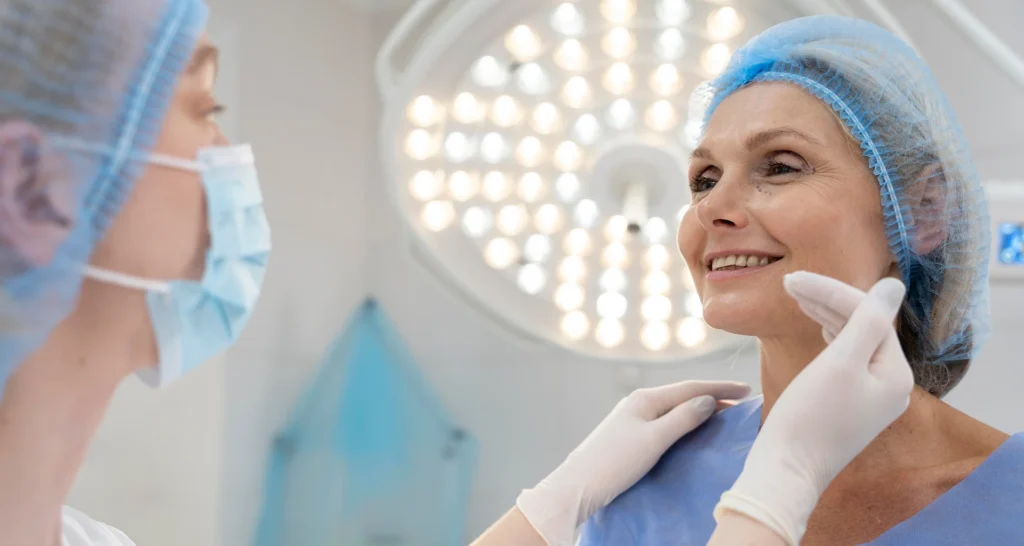
The goal of MOHS surgery is to remove the tumor and any surrounding tissue that may be cancerous using microscopic control. To start the procedure, you will be administered a long-acting local anesthesia injection. Next, Physician specialist will use a scalpel to remove your cancerous growth, as well as a small portion of surrounding skin. You will wait in the reception area (this can be as long as an hour or more) while the specimen is processed and reviewed by Physician specialist using a microscope to analyze the tissue for signs of cancer. If any cancer remains, the location is mapped so that she will know where to take the next specimens noting the size and location of any remaining cancer. This continues in a step wise fashion until the surgery site shows no signs of cancer and the removal is complete and you are cancer-free. Once she has eliminated all suspicious tissue, Physician specialist will discuss with you in detail your options for repair of the wound. This can be managed in one of several different ways. The wound can be allowed to heal by itself or the wound can be closed with simple primary closure, skin flap, or skin graft.

Lastly, for extensive or complicated wounds, Physician specialist maintains a close working relationship with plastic and ENT surgeons who are very skilled and accommodating to the needs of MOHS surgery patients. We will do everything possible to assure that you have the best cosmetic result possible.

Prior to and after the procedure, you will be given detailed and thorough pre- and post-operative instructions. Please read them carefully and follow them as best as possible to ensure the best outcome of your procedure. Because Mohs surgery is performed in stages and each step requires careful microscopic examination, patients should expect to be in the office for most of the day. You should wear loose, comfortable clothing, bring entertainment or a companion to help pass the time, and consider lunch arrangements if the procedure extends into the afternoon. We will do our best to make you as comfortable as possible.

You should be able to return to work and normal activity the day after your MOHS surgery. Follow-up visits are schedule from 1 to 2 weeks after your procedure. Most patients experience only minimal discomfort, but Dr. Campbell can prescribe oral pain medications to alleviate this if you feel the need. Your skin may take from 6 to 12 months to fully heal, however, and the skin in your treatment area may be red and swollen a few weeks. Although MOHS surgery should remove all existing malignancies, you will still need to take certain precautions to ensure skin cancer doesn’t recur. These include limiting sun exposure, wearing sunscreen when outdoors, avoiding smoking, and returning for follow-up exams as requested.

We provide effective eczema treatment, addressing red, itchy, and inflamed skin that impacts daily comfort. Though common at any age, it is especially frequent in children.
Physician specialist offers expert diagnosis and personalized care to manage symptoms and restore healthier skin.

Skin cancer is the most common form of cancer with more than 3 million cases diagnosed in this country each year. Due to its seriousness and frequency, we provide patients with comprehensive care for the treatment of skin cancer. Dr. Campbell offers numerous procedures to help our patients maintain their dermatological and overall health. With proper education and awareness, you can notice skin cancer or precancerous indications and pursue treatment before they progress further.

We can diagnose, treat, and monitor signs of skin cancer for your well-being, appearance, and peace of mind. To learn more about skin cancer or schedule a consultation with Dr. Campbell, contact our office today.

Skin cancer is the abnormal and uncontrolled growth of skin cells. If left untreated, skin cancers will slowly grow and destroy surrounding tissue. Some skin cancers can spread to other parts of your body and be fatal. For this reason, early detection and treatment are important to ensure a good outcome. There are three primary types of skin cancer.

Basal Cell Carcinoma

This type of skin cancer is the least dangerous of the three because it is usually slow-growing and not likely to spread throughout your body. Basal cell carcinoma growths often have a lustrous, shiny surface and can be pink, brown, or flesh-colored. They often bleed easily with minimal skin trauma such as rubbing or shaving. They can occur on any part of the body which has a history of sun or tanning bed exposure.

These cancerous growths are the second most common type. They frequently occur as raised, scaly growths or persistent ulcers that flake or bleed. Although they can, in some instances, spread to other parts of your body, if they are treated early this is not likely to occur and the outcome is usually good. Like Basal cell carcinomas, Squamous cell carcinomas also tend to occur in skin areas with long-term ultraviolet light exposure.

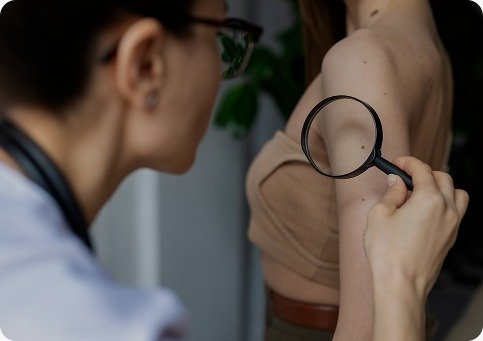
This is one of the most dangerous types of skin cancer as it can be aggressive and may spread to other areas of the body. Melanoma grows in the pigmented skin cells, and can sometimes develop from moles. Because of this, it is important to monitor your entire skin surface and existing moles for the ABCDEs (asymmetry, unusual borders, shifting colors, expanding diameters, and any other form of evolution) or change in the mole’s appearance or texture. Moles that begin to ooze liquid, bleed, grow rapidly or irregularly should always be examined by a Dermatologist.

As a general rule, if you notice any unusual or changing skin growths, contact our office for a consultation. The earlier we can detect and treat skin cancer, the better it is for you.

Dr. Campbell may recommend one or more treatment options based on the type, size, and scope of your skin precancer or skin cancer.

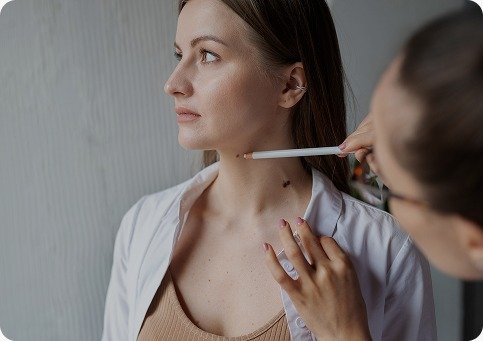
When you come in for your consultation, Dr. Campbell will examine your skin for signs of cancerous or precancerous growths (such as actinic keratoses, which can become Squamous cell carcinomas). If she notices anything suspicious, she will recommend that it be biopsied. After a local anesthetic and removal of a tissue sample, the specimen will be processed at a lab and she will examine it under a microscope to determine if it is cancerous and, if so, which type of skin cancer it is. At this point, Dr. Campbell will recommend an appropriate course of treatment. We are committed to finding the most effective and cosmetically acceptable methods with the highest cure rate to keep your skin healthy.

Cryotherapy – Dr. Campbell may use liquid nitrogen to freeze precancerous growths, causing them to slough off over the next few weeks.

Topical Chemotherapy – Lotions or creams with chemicals that prevent cell growth may be prescribed to stop the spread or development of skin cancer and precancers. You will apply this treatment directly on your skin once or twice daily for about six weeks until your lesions are gone.

Superficial Destruction – For small low-risk Squamous or Basal cell carcinomas, this method is often used where the tumor is destroyed with an instrument called a Curette.

Surgical Excision – In this common procedure, the tumor site is marked, surgically removed and repaired, and the specimen is sent to an outside lab for processing. This is a method for Melanomas and is sometimes used with other skin cancers.

Mohs Surgery – Typically reserved for more complex skin cancer cases or patients with a high risk of recurrence, Dr. Campbell can surgically remove the tumor and surrounding layers of skin with Mohs surgery. In this process, he will also microscopically examine each tissue specimen in detail to ensure that no malignancy remains.

Radiation – If your skin cancer is more aggressive, large, or has spread to other parts of your body, Dr. Campbell may refer you to a radiation specialist for more advanced treatment.

At Campbell Dermatology and Aesthetics, we will work closely with you to determine which treatment options are appropriate for your needs and preferences. With each of these treatments, Dr. Campbell uses her dermatological knowledge and experience to effect a high cure rate while giving ample concern for the cosmetic outcome. No matter which procedure you choose, we arrange for your long-term follow-up to detect any possible recurrences or additional skin cancers.

Early detection and treatment are vital. Understanding these serious conditions and knowing when to seek treatment could save your life. Contact our office today to schedule a consultation with Dr. Campbell.

Although often concern and attention by patients and the media is with skin cancer and precancerous growths, most lesions growing on the skin are benign. However, benign growths are also important. The most common benign lesions are cysts, moles, lipomas, skin tags, and various keratoses. They are a frequent source of pain, itching, and irritation. At Campbell Dermatology and Aesthetics, we never take your concerns about any growth lightly. After a careful look at your skin, we can discuss the options for removal.​ ​

If you have cysts or any unwanted growths, these can usually be removed with little scarring by a variety of techniques. These techniques may include excision, destruction with laser, or liquid nitrogen. Using topical or injectable anesthesia, Dr. Campbell can provide safe and effective removal with little discomfort. For each procedure that requires it, we will perform a pathology on any removed tissue to test for any malignancy, and recommend additional treatments as needed.

We treat Skin Tags, which are harmless, soft skin growths that hang off the skin. Most don’t need treatment, but if one irritates you or bleeds, we offer safe removal options.

If you have cysts or any unwanted growths, these can usually be removed with little scarring by a variety of techniques. These techniques may include excision, destruction with laser, or liquid nitrogen. Using topical or injectable anesthesia, Dr. Campbell can provide safe and effective removal with little discomfort. For each procedure that requires it, we will perform a pathology on any removed tissue to test for any malignancy, and recommend additional treatments as needed.

Skin Tags Symptoms
  • Small, soft bumps on skin folds
  • Same color or slightly darker than skin
  • Usually painless, may bleed or snag
  • Skin rubbing against skin in folds (neck, armpits, groin, under breasts)
  • Increase with age
  • Higher risk if you have obesity, diabetes, or genetic predisposition
  • Hormonal changes (pregnancy, growth factors)
  • Snipping, freezing, or cauterizing
  • Quick, in-office procedures
  • Removed tags don’t return
  • New ones may form over time
  • Prevention: healthy weight, avoid tight clothing

Google Review

Tony
06:22 07 Nov 25
Everyone at Campbell Dermatology was so polite and professional. I felt like they were family. Joel examined my problem skin areas and determined very quickly that there were no spots to be concerned about. It was a wonderful visit!
John Terry
05:23 07 Nov 25
Friendly, thorough, professional treatment.
Jeff Meier
19:05 06 Nov 25
My visit was good with regards to the questions I had and the doctors feedback on what he had seen.
Forrest Peterson
03:13 06 Nov 25
Prompt check in, minimal wait time, considerate staff, professional examination, swift exit.
Could not be a better experience.
Jess Arnett
18:52 01 Nov 25
Awesome Doctors, very willing to answer questions and they are very thorough and trustworthy.
Janet Quinn
18:50 01 Nov 25
I make an annual appointment for skin check and removals as needed. Dr Campbell always greets me with a smile, listens and answers my questions. Her MA is also nice and assists as needed. The office is comforting and clean. I like the music they play in the office and exams rooms, it’s relaxing.
Becky Donaly
18:05 01 Nov 25
Everyone has been really good to me. I would highly recommend Dr Campbell to everyone. I tell all my friends how she found my melanoma when I never saw it. Plus it didn't bother me. I really appreciate her.
Compassion + Precision in Every Procedure

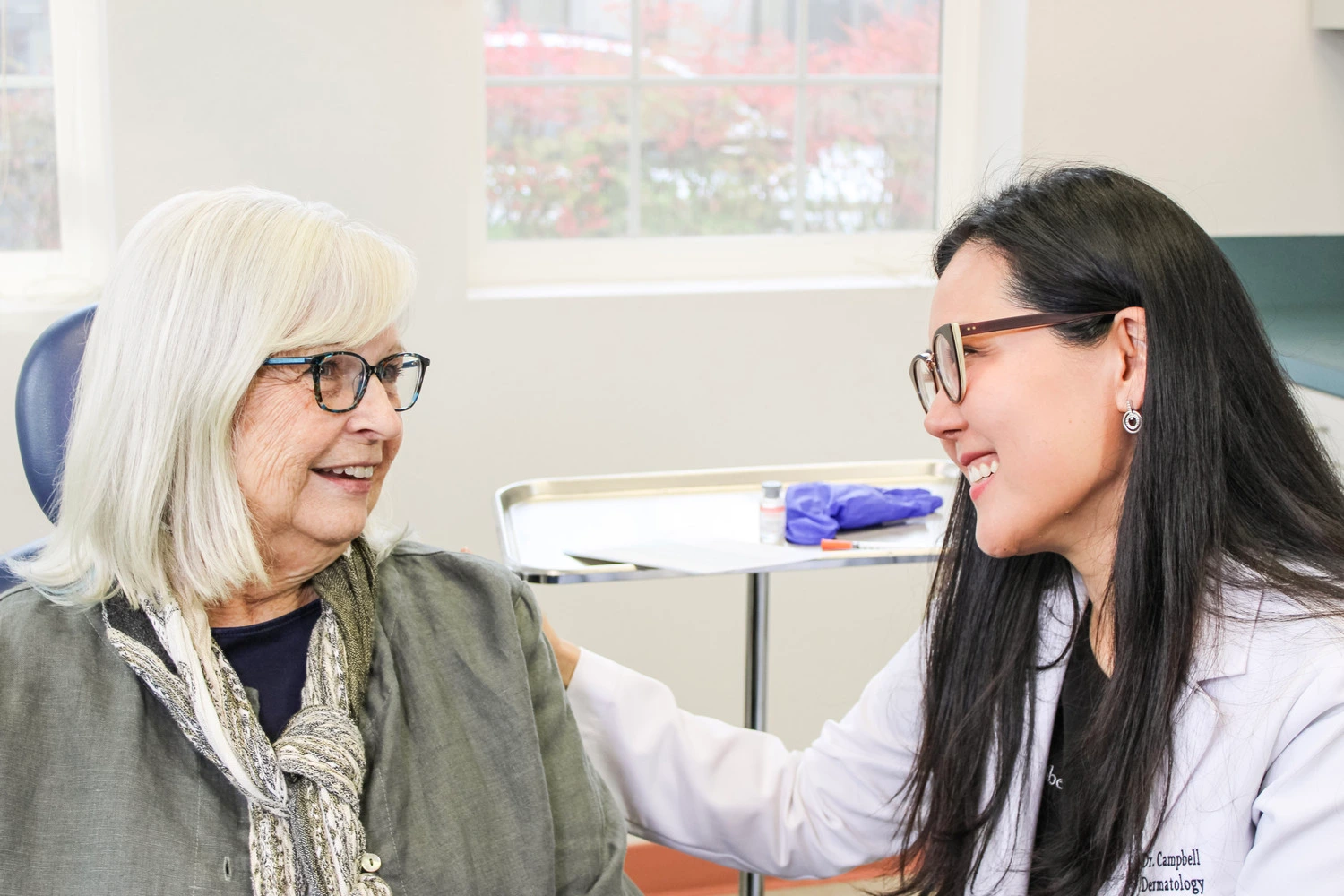
Physician specialist takes time to explain every procedure, ensuring you feel confident and informed. With advanced techniques and evidence-based care, we provide safe outcomes and peace of mind.

“Your safety is our highest priority. We treat every patient like family.”

Discover the Latest in Skin Health & Beauty

Explore Expert Articles & Skin Care Tips

Stay informed with our latest updates on prevention, treatment, and care — written by our dermatology specialists to help you keep your skin healthy and confident.

Scroll to Top